FND and Art - A tool for discovery within early onset diagnosis.
0% Completed
Introduction
FND and Art
What is FND?
Learning about FND
WEAKNESS
People with FND report limb weakness.
TREMOR
People with FND report internal and external tremors.
WALKING AND GAIT ISSUES
People living with FND can find walking difficult.
TICS AND INVOLUNTARY MOVEMENT
A symptom of FND is motor tics and involuntary movements.
SEIZURES – NON EPILEPTIC ATTACK DISORDER
People with FND can have seizures.
COGNITIVE AND SPEECH ISSUES
FND can impact the ability to process information.
VISUAL DISTURBANCES
People with FND can have visual disturbances.
DYSTONIA
Functional dystonia can be a symptom of FND.
SENSITIVITY TO LIGHT, NOISE AND SMELL
People with FND often report an assault on the senses.
FATIGUE
People with FND live with a level of fatigue.
Next Steps in your FND journey

ACTIVITY > SEIZURES – NON EPILEPTIC ATTACK DISORDER
GETTING TO KNOW YOU
You will need:
- a pen
- a piece of paper
Task
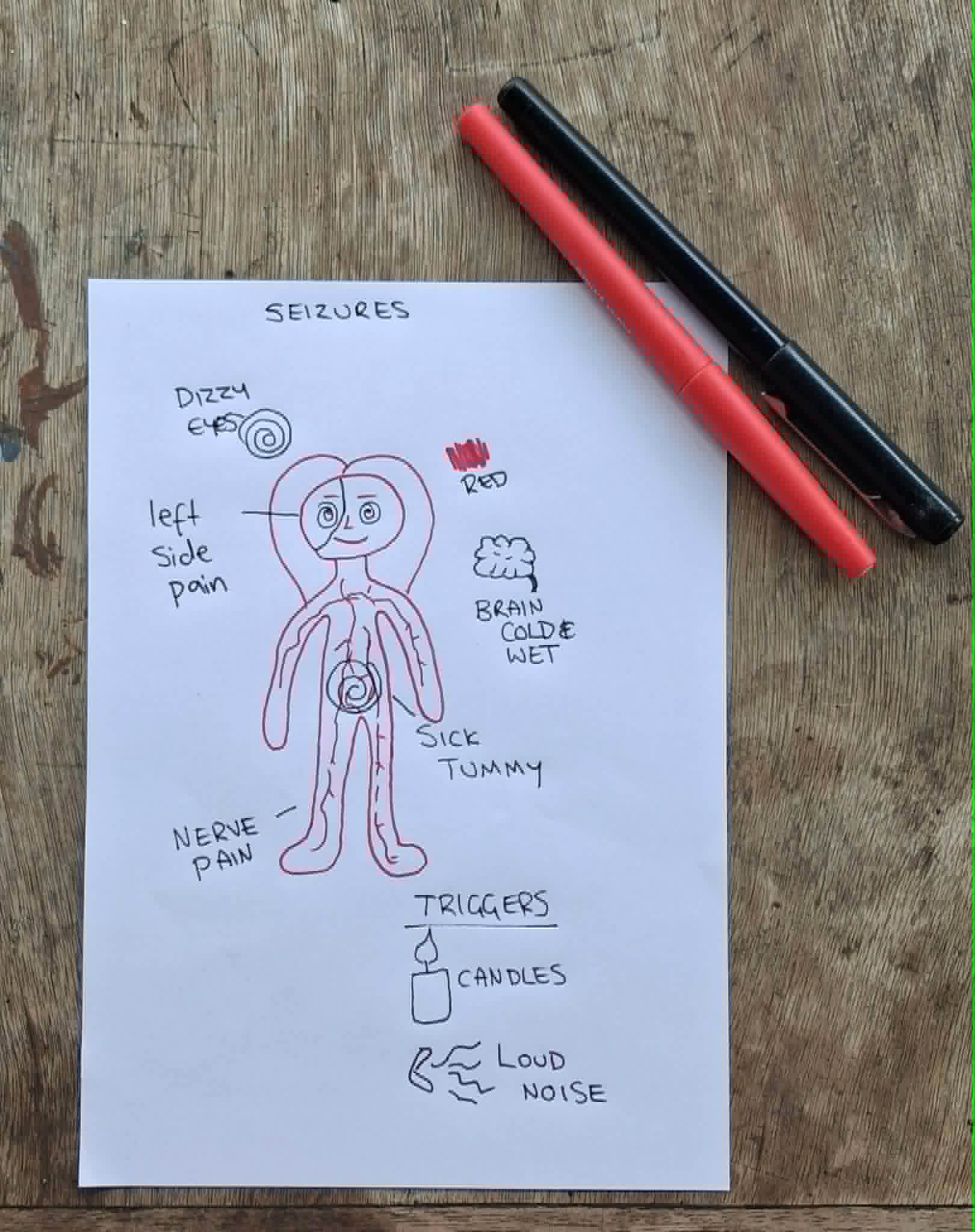
Draw a person and name the feelings you experience before, during and after a seizure.
What colour does it feel? What colour are your nerves? How does it taste? Do your eyes feel funny? Does your brain feel hot or cold? Where in your head do you feel it? Draw your potential triggers next to the person, such as a loud noise or the smell of a berry candle.
Here is an example
Pause, unclench your jaw, drop your shoulders, let out a sigh and take a break.